Driver checks and kernel troubleshooting often start by confirming which loadable modules the running Linux kernel has active. Listing the module table shows whether a driver or subsystem was loaded separately, whether another module is using it, and which name to use before a later modprobe load or removal step.
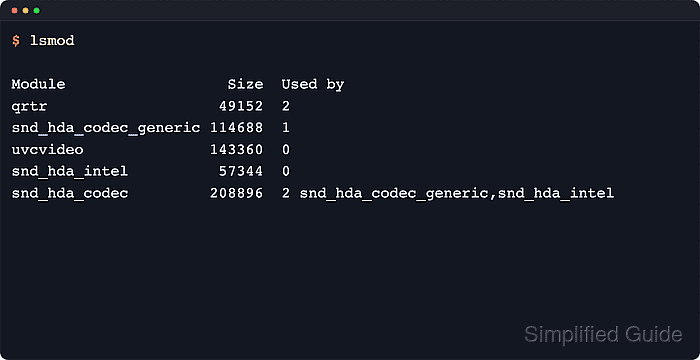
The lsmod command formats the live module list from /proc/modules. Its columns show the module name, size in bytes, and a Used by field that starts with the reference count and can include dependent module names.
The list reflects the currently running kernel, not every module package installed under /lib/modules. Containers usually show the host kernel's module table, minimal images may need the kmod package before lsmod exists, and features built directly into the kernel can appear under /sys/module without showing up as loadable entries in lsmod.
Related: How to load a kernel module in Linux
Related: How to unload a kernel module in Linux
Related: How to show hardware information in Linux
Steps to list loaded kernel modules in Linux:
- List the loaded module table with lsmod.
$ lsmod
Module                  Size  Used by
bridge                421888  1 br_netfilter
dummy                  12288  0
nf_tables             380928  2 nft_ct,nft_chain_nat
xfs                  2293760  1
##### snipped #####
The first column is the module name. Size is the module footprint in bytes, and Used by begins with the current reference count.
- Read /proc/modules when you need the raw records behind lsmod.
$ cat /proc/modules
bridge 421888 1 br_netfilter, Live 0x0000000000000000
dummy 12288 0 - Live 0x0000000000000000
nf_tables 380928 2 nft_ct,nft_chain_nat, Live 0x0000000000000000
xfs 2293760 1 - Live 0x0000000000000000
##### snipped #####
lsmod reads this file and formats the same loaded-module set into columns.
- Check dependent modules when the Used by field names them.
$ ls /sys/module/bridge/holders
br_netfilter
Each entry under /sys/module/<module>/holders is another module currently holding a reference to that module.
- Inspect sysfs for a kernel feature that does not appear in lsmod.
$ ls /sys/module/loop
parameters
uevent
A directory under /sys/module can also exist for a feature built into the kernel image. Use lsmod to confirm whether the name is loaded as a separate module.

Mohd Shakir Zakaria is a cloud architect with deep roots in software development and open-source advocacy. Certified in AWS, Red Hat, VMware, ITIL, and Linux, he specializes in designing and managing robust cloud and on-premises infrastructures.


