Real-user performance changes with visitors' devices, network conditions, and interactions rather than one controlled page load. Core Web Vitals reduce that experience to loading speed, responsiveness, and visual stability signals that can be checked for a public page.
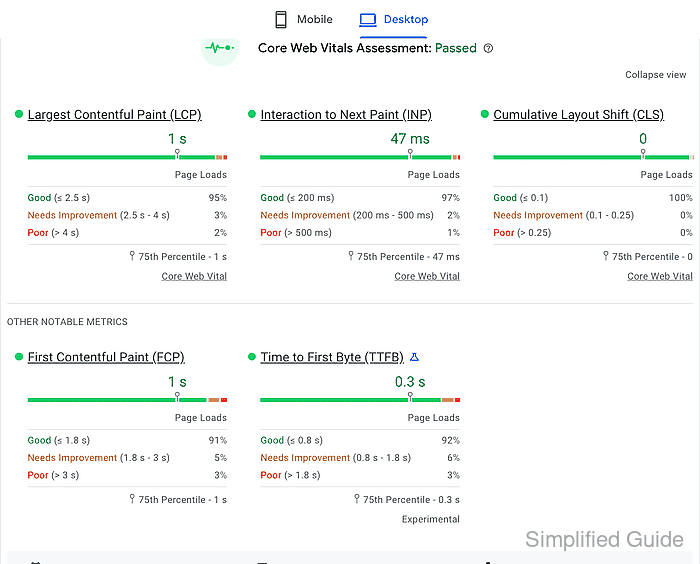
Google's PageSpeed Insights combines field data from the Chrome User Experience Report with a separate Lighthouse lab run. The field panel covers the latest 28-day period and reports 75th-percentile Largest Contentful Paint (LCP), Interaction to Next Paint (INP), and Cumulative Layout Shift (CLS) values.
Field data can describe the exact URL, fall back to eligible visits across the origin, or be absent when traffic is insufficient. The selected Mobile or Desktop tab and the This URL or Origin scope identify which traffic segment the assessment represents. Only public URLs without signed parameters, session tokens, or other secrets belong in the external test.
Related: How to speed up page load time
Steps to check Core Web Vitals in PageSpeed Insights:
- Enter the complete public page URL in the PageSpeed Insights input.

The page must be publicly reachable and have enough anonymized Chrome traffic for field data.
- Click Analyze to run the PageSpeed Insights test.
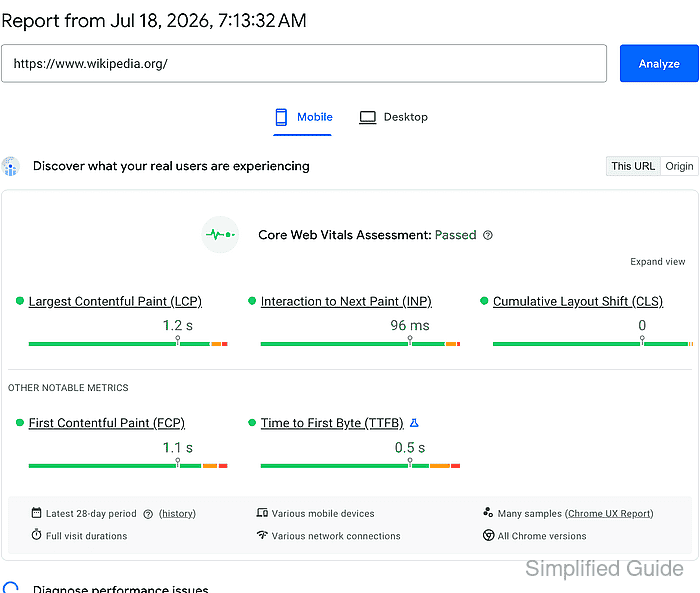
The initial result opens on Mobile, and each device tab has a separate assessment.
- Select Desktop to inspect field data for that device class.
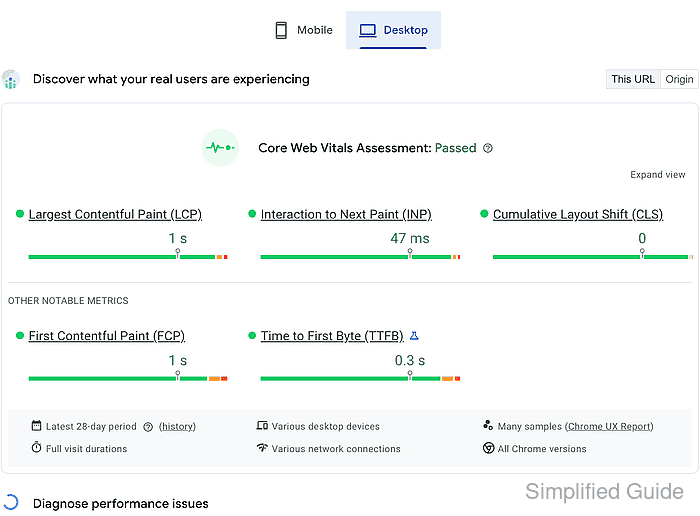
This URL means the values describe the requested page. Origin means PageSpeed Insights fell back to eligible visits across the site because URL-level data was unavailable.
- Expand the real-user experience panel to display the metric distributions and percentile labels.
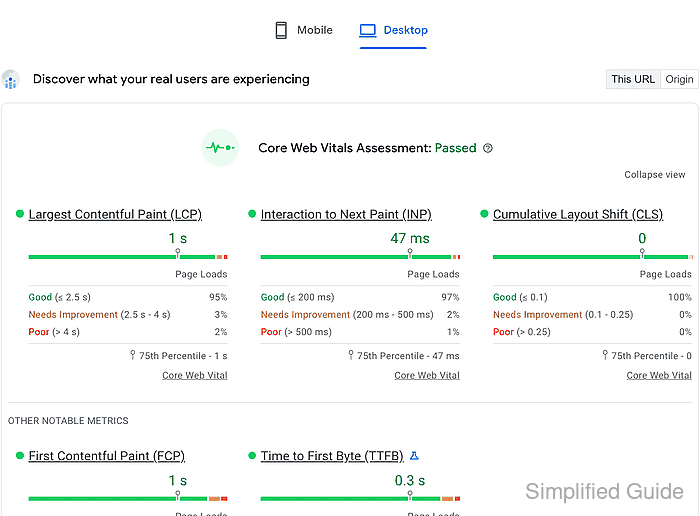
- Confirm that the selected device result reports an assessment plus 75th-percentile LCP, INP, and CLS values.
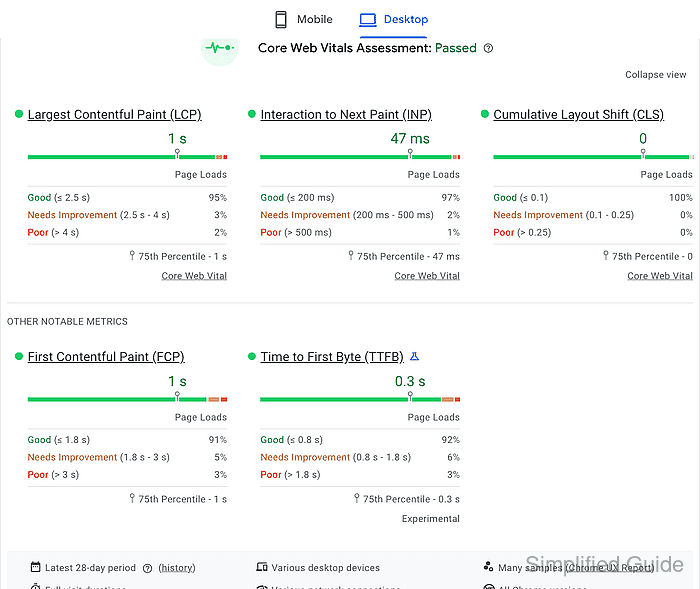
A passing assessment requires LCP at or below 2.5 seconds, INP at or below 200 milliseconds, and CLS at or below 0.1. One metric outside its good threshold makes the overall assessment fail.

Mohd Shakir Zakaria is a cloud architect with deep roots in software development and open-source advocacy. Certified in AWS, Red Hat, VMware, ITIL, and Linux, he specializes in designing and managing robust cloud and on-premises infrastructures.


