Automatic login starts the graphical desktop session without asking for an account password. Disabling it on openSUSE or SLES restores the normal sign-in prompt, which matters on laptops, shared workstations, lab systems, and any machine where physical access should not be enough to reach the desktop.
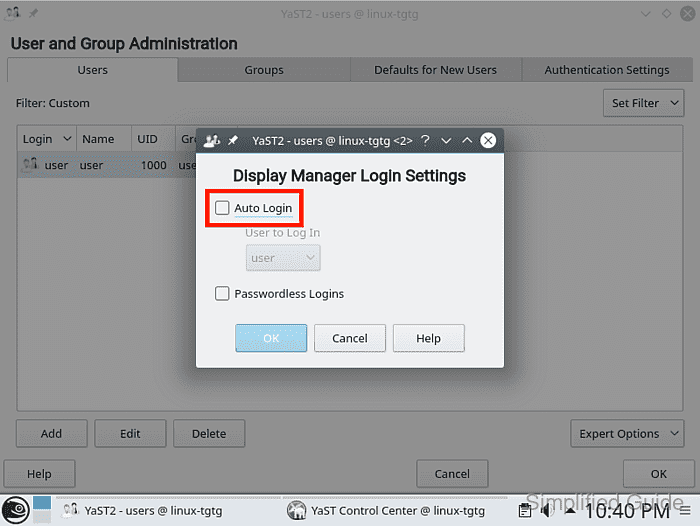
YaST exposes this behavior in User and Group Management under Expert Options → Login Settings. The Auto Login option tells the display manager whether one local account should be signed in automatically when the graphical session starts.
The change affects the next start of the graphical login manager rather than the current desktop session. Current SUSE and openSUSE documentation places the setting in the YaST login settings dialog for graphical environments; if Login Settings is unavailable, the active display manager may not support changing automatic login from YaST.
Steps to disable automatic login in openSUSE and SLES using YaST:
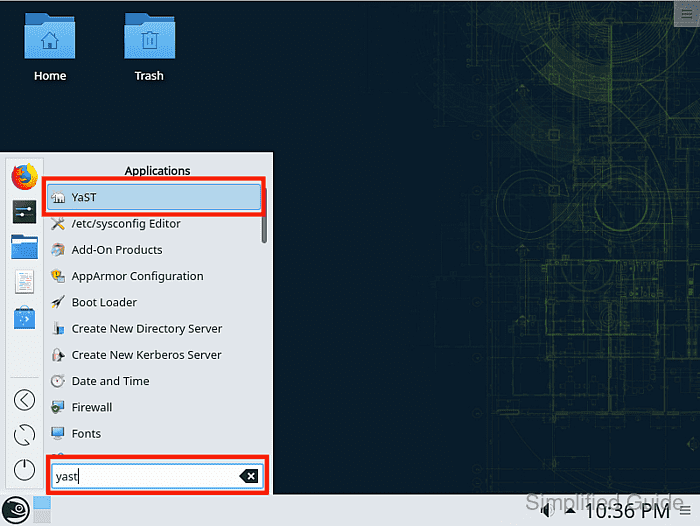
- Launch YaST and authenticate if prompted.
- Go to Security and Users → User and Group Management.
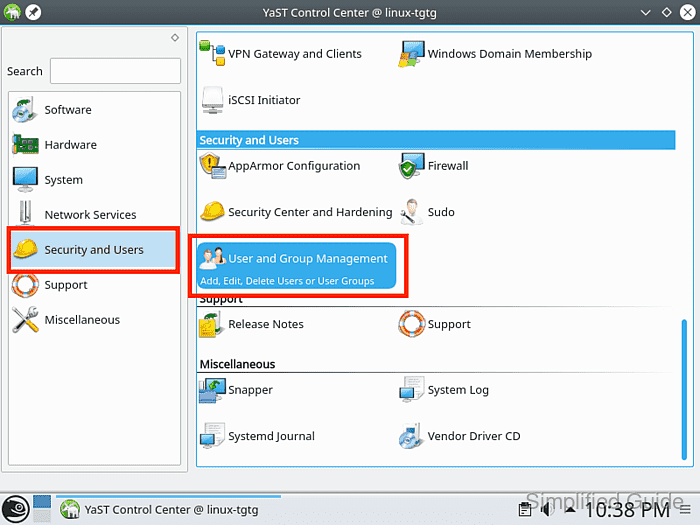
Some current SUSE documentation refers to this module as User and Group Administration, but the path remains under Security and Users.
- Open Expert Options → Login Settings.
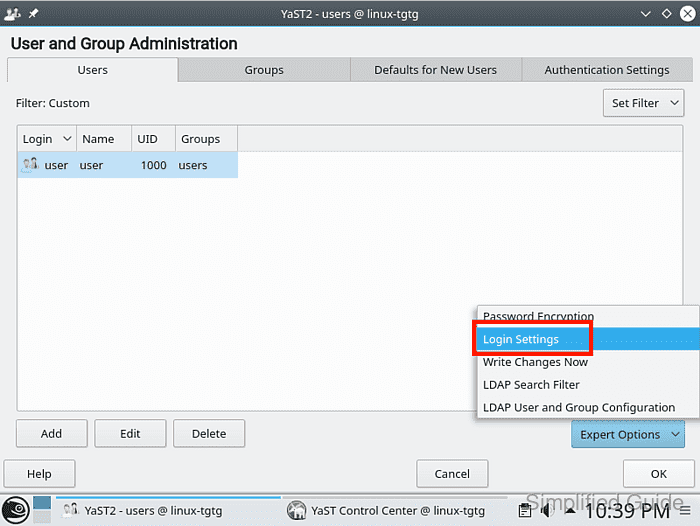
If Login Settings is unavailable, the installed graphical login stack may not expose automatic-login controls through YaST.
- Clear the Auto Login checkbox and click OK.
Automatic login bypasses the normal password prompt at the greeter. Clearing the option restores password-based sign-in the next time the display manager starts.
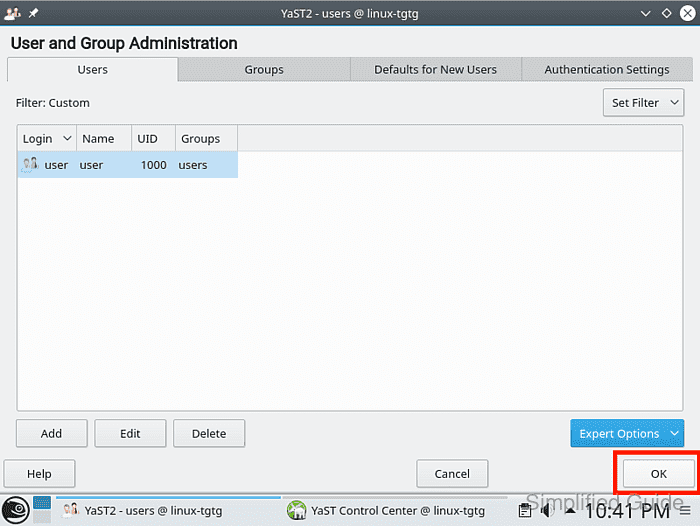
- Click OK in the main User and Group Management window to save the change.
Sign out or restart the system after saving, then confirm the graphical login screen now prompts for the account password instead of opening the desktop automatically.

Mohd Shakir Zakaria is a cloud architect with deep roots in software development and open-source advocacy. Certified in AWS, Red Hat, VMware, ITIL, and Linux, he specializes in designing and managing robust cloud and on-premises infrastructures.


