A vertical Screen split divides the current terminal display into left and right regions. Use it when a log, editor, monitor, or long-running command needs to stay visible beside another shell without opening a second terminal emulator window.
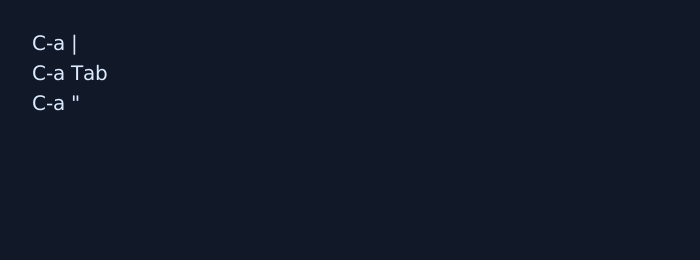
GNU Screen creates this layout with the split -v command, exposed by default as C-a |. The new region appears on the side and starts as Screen's blank window, so it needs focus and either a new window or an existing window selection before it can receive input.
Regions are display areas, not independent shells. Removing the side region later does not kill the Screen window shown there, and vertical regions can scroll more slowly than a full-width region. Test C-a : split -v first on older systems before relying on the key binding.
Steps to split a Screen region vertically:
- Start in the Screen region that should be divided into left and right areas.
The split applies to the currently focused region.
- Press the default vertical split binding.
C-a |
The command-prompt equivalent is C-a : split -v. Screen displays a blank window in the new side region.
- Move focus into the new side region.
C-a Tab
In a larger layout, C-a : focus right can target the side region directly when it is to the right of the current region.
- Create a new shell window in the focused side region.
C-a c
Use C-a “ instead when an existing Screen window should be displayed in the side region.
- Verify that keyboard input reaches the right region.
$ printf 'right region ready\n'
right region ready
The output should appear in the right region. If it appears on the left, press C-a Tab again before running the command you intend to use.
- Return focus to the left region when needed.
C-a Tab
Focus changes which region receives keyboard input. It does not move, stop, or kill the windows shown in the other regions.