Cookie authentication keeps database credentials out of phpMyAdmin's persistent configuration, but its default idle window can interrupt long administration tasks. Extending that window requires phpMyAdmin's login-cookie limit and PHP's session lifetime to agree.

The official Docker image loads persistent application overrides from /etc/phpmyadmin/config.user.inc.php and additional PHP settings from files under /usr/local/etc/php/conf.d. Read-only Compose mounts keep both changes outside the replaceable container filesystem.
The one-hour value below is 3600 seconds, longer than phpMyAdmin's default 24-minute login-cookie validity. Use the shortest interval that covers the work, because an unattended authenticated tab remains usable for the extended period.
Related: Find phpMyAdmin configuration files
Related: Deploy phpMyAdmin with Docker Compose
Steps to increase the phpMyAdmin session timeout with Docker Compose:
- Open a terminal in the Docker Compose project directory containing compose.yaml.
- Create the local phpMyAdmin override directory.
$ mkdir -p phpmyadmin
- Create the phpMyAdmin user override file in an editor.
$ vi phpmyadmin/config.user.inc.php
- Set LoginCookieValidity to one hour in the phpMyAdmin override.
- phpmyadmin/config.user.inc.php
<?php
$cfg['LoginCookieValidity'] = 3600;
A longer login lifetime increases the exposure of an unattended authenticated browser. The endpoint should remain behind HTTPS and restricted network access, while the default session-only browser cookie avoids persistence beyond the browser session.
- Create the PHP session override file in an editor.
$ vi phpmyadmin/session-timeout.ini
- Set session.gc_maxlifetime to the same one-hour interval.
- phpmyadmin/session-timeout.ini
session.gc_maxlifetime = 3600
PHP can discard session data after this many inactive seconds, so a smaller value would invalidate the phpMyAdmin login before LoginCookieValidity is reached.
- Add both read-only source mounts from the project's phpmyadmin/ subdirectory to the existing phpmyadmin service.
- compose.yaml
services:
  phpmyadmin:
    volumes:
      - ./phpmyadmin/config.user.inc.php:/etc/phpmyadmin/config.user.inc.php:ro
      - ./phpmyadmin/session-timeout.ini:/usr/local/etc/php/conf.d/session-timeout.ini:ro
Existing service mounts remain alongside these entries.
- Validate the completed Compose configuration.
$ docker compose config --quiet
A valid configuration exits with status 0 and prints no output.
- Recreate the phpmyadmin service with the mounted timeout settings.
$ docker compose up --detach --force-recreate phpmyadmin
- Verify that phpMyAdmin and PHP both load the one-hour limits.
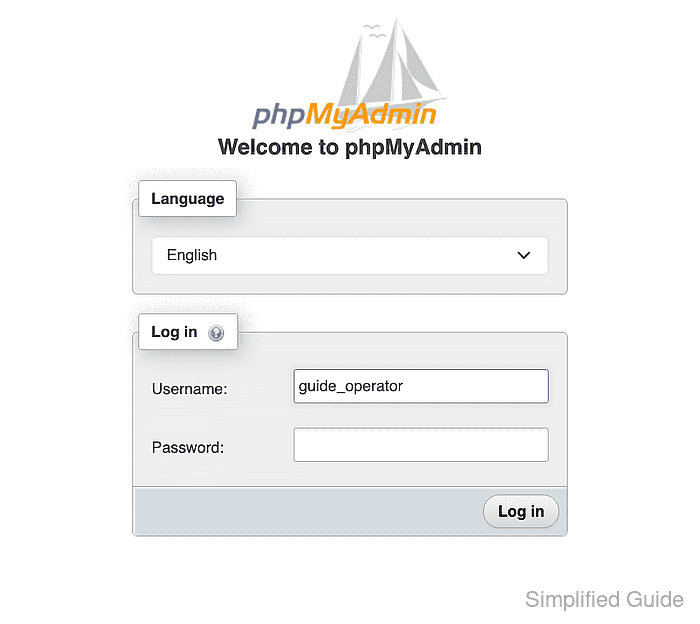
$ docker compose exec phpmyadmin php -r '$cfg = []; require "/etc/phpmyadmin/config.user.inc.php"; printf("LoginCookieValidity=%s\nsession.gc_maxlifetime=%s\n", $cfg["LoginCookieValidity"], ini_get("session.gc_maxlifetime"));' LoginCookieValidity=3600 session.gc_maxlifetime=3600 - Enter the username for a restricted database account on the phpMyAdmin login page.
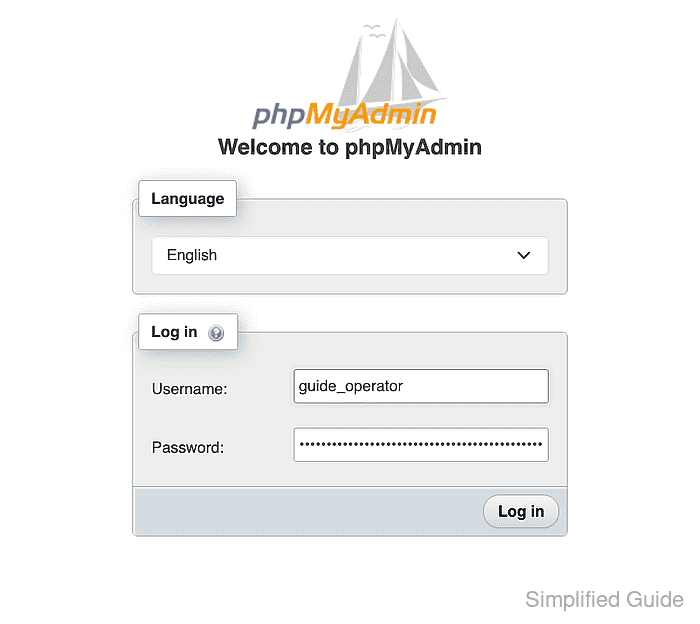
- Enter the restricted account password in the phpMyAdmin password field.
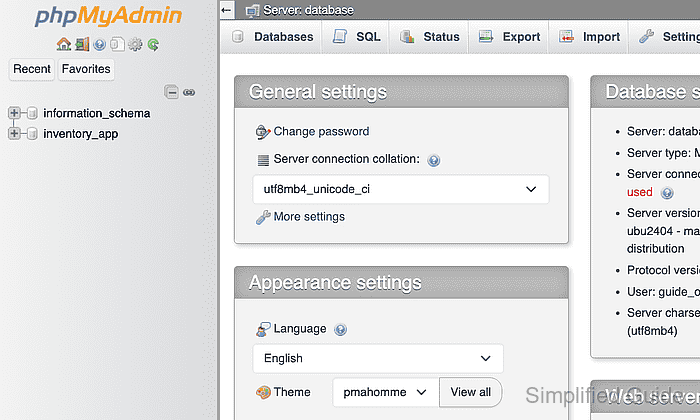
- Submit the phpMyAdmin login form under cookie authentication.
- Leave the authenticated browser tab idle until the previous timeout interval has passed.
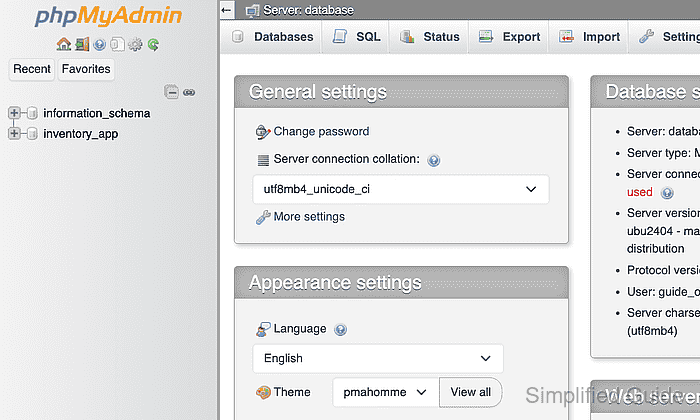
- Reload the phpMyAdmin page after the previous timeout interval has passed.
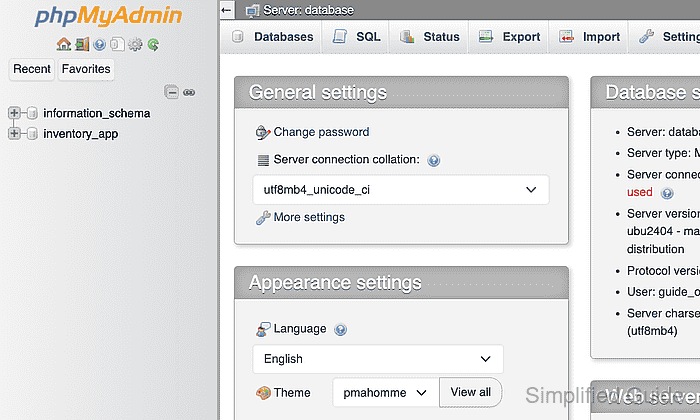
- Open a permitted database from the reloaded dashboard to confirm that the authenticated session remains usable after the former timeout boundary.

Mohd Shakir Zakaria is a cloud architect with deep roots in software development and open-source advocacy. Certified in AWS, Red Hat, VMware, ITIL, and Linux, he specializes in designing and managing robust cloud and on-premises infrastructures.


