Wi-Fi problems on an iPhone or iPad can persist after a restart. Reset Network Settings returns the device's network settings to their defaults.
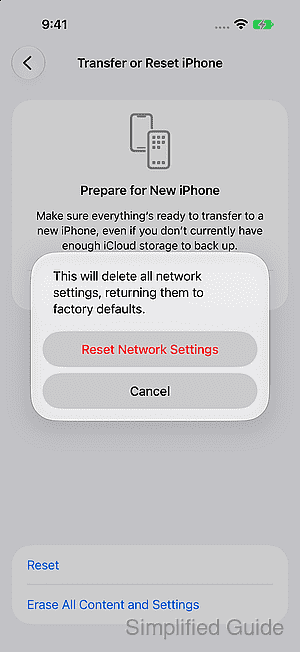
The reset removes saved Wi-Fi networks and passwords, cellular settings, and manually configured VPN and APN settings. Network settings installed by a configuration profile or mobile device management (MDM) remain in place. A network reset is a later troubleshooting step after simpler fixes fail, rather than a guaranteed cure for connection problems.
Resetting network settings does not delete personal data or media stored on your device. Photos, contacts, and apps remain unaffected. The similarly named Reset All Settings changes many more preferences, while Erase All Content and Settings erases the device.
Steps to reset network settings on iPhone or iPad:
- Keep your Wi-Fi password and any manual VPN or APN setup details available.
The reset disconnects the device and removes saved network settings. If a school or business manages the device or its network, consult its administrator before resetting.
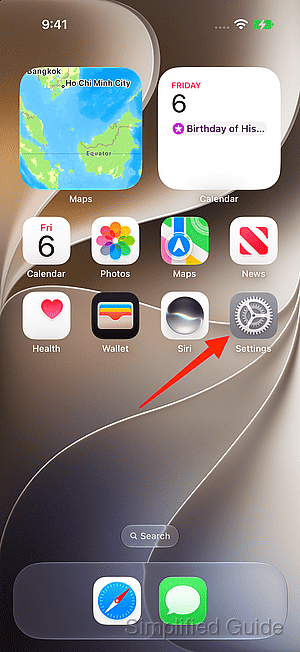
- Open the Settings app.
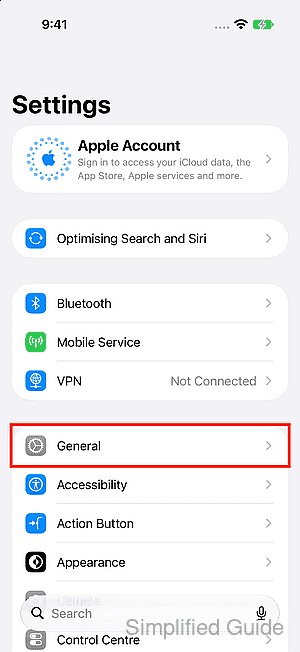
- Tap General.
- Tap Transfer or Reset iPhone on iPhone or Transfer or Reset iPad on iPad.
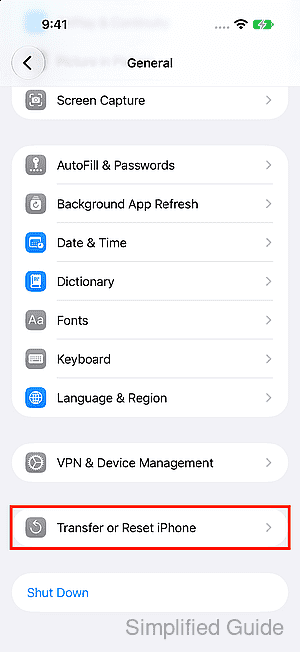
This entry is at the bottom of General.
- Tap Reset.
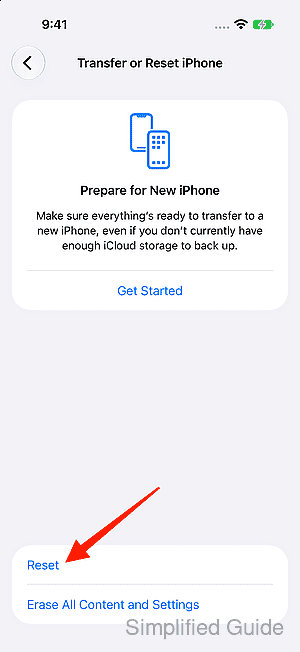
Do not choose Erase All Content and Settings, which deletes your content, or Reset All Settings, which changes more than network settings.
- Select Reset Network Settings.
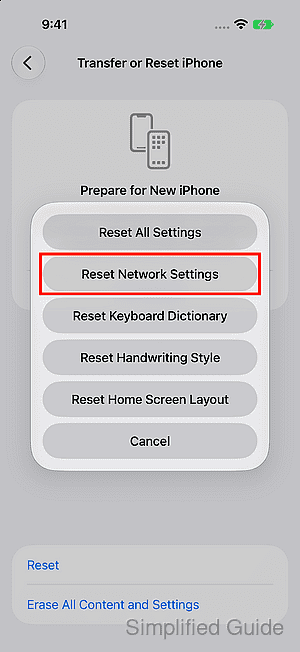
The reset also changes the device name to iPhone or iPad, removes manual trust for certificates, and may turn off cellular data roaming.
- Enter your device passcode if prompted.
- Tap Reset Network Settings in the confirmation dialog.
Wi-Fi turns off and back on during the reset, which disconnects the device from its network.
- Reconnect to your network in Settings > Wi-Fi by tapping its name and entering its password.
A blue checkmark beside the network name shows that the device is connected.