Google Chrome is a proprietary browser that SUSE systems can manage as an RPM package. Google's RPM repository supplies installation and updates through zypper, with installation and dependencies checked on openSUSE Leap 16.0 and SLES 16.1 on ARM64.
Google's Linux requirements name openSUSE 15.5 or later and support both x86-64 processors with SSE3 and 64-bit ARM processors. The RPM repository provides both architectures. SLES is not on Google's published support list, so package compatibility does not establish vendor support.
zypper can install proprietary software; Chrome needs an additional source because Google distributes it separately from SUSE. A graphical desktop and sudo access are required. Importing Google's key grants system-wide RPM trust to packages signed by that key, and Google's signing-key documentation publishes its fingerprint.
Steps to install Google Chrome on openSUSE and SLES:
- Import Google's signing key into the RPM trust database.
$ sudo rpm --import https://dl.google.com/linux/linux_signing_key.pub
- Add Google's stable RPM repository with automatic metadata refresh.
$ sudo zypper addrepo --refresh 'https://dl.google.com/linux/chrome/rpm/stable/$basearch' google-chrome
##### snipped #####
Repository 'google-chrome' successfully added

URI         : https://dl.google.com/linux/chrome/rpm/stable/aarch64
Enabled     : Yes
GPG Check   : Yes
Autorefresh : Yes
Priority    : 99 (default priority)
##### snipped #####
The single quotes preserve
$basearchfor zypper to expand tox86_64oraarch64. - Install the stable Chrome package and its dependencies.
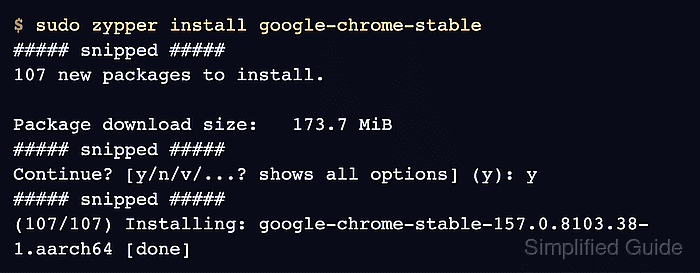
$ sudo zypper install google-chrome-stable
##### snipped #####
107 new packages to install.

Package download size:   173.7 MiB
##### snipped #####
Continue? [y/n/v/...? shows all options] (y): y
##### snipped #####
(107/107) Installing: google-chrome-stable-157.0.8103.38-1.aarch64 [done]
##### snipped #####
An unknown key or failed signature is a reason to stop. Accepting unverifiable metadata can allow tampered software onto the system.
Later Chrome versions arrive through the normal zypper update process because the repository stays enabled.
- Launch Chrome as your normal desktop user.
$ google-chrome-stable
Chrome must run in the graphical session as an ordinary user. Running it with sudo or disabling its sandbox weakens browser isolation.
- Accept Google's terms if you agree to them.
Example output:
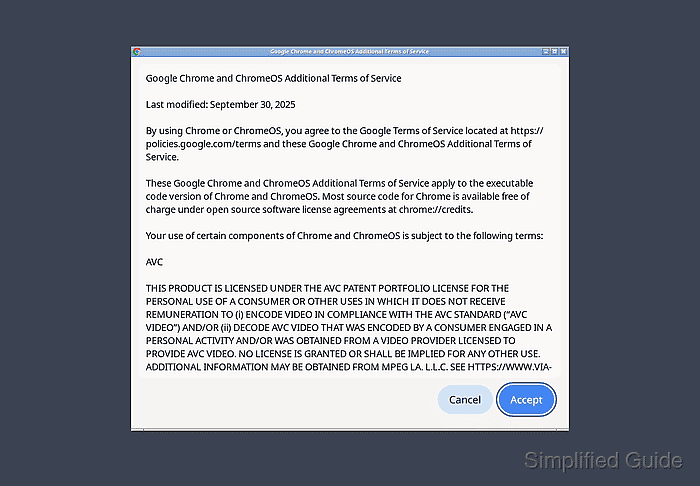
The first launch can display Google Chrome and ChromeOS Additional Terms of Service with an Accept button.
- Click OK in the Welcome to Google Chrome dialog.
Example output:
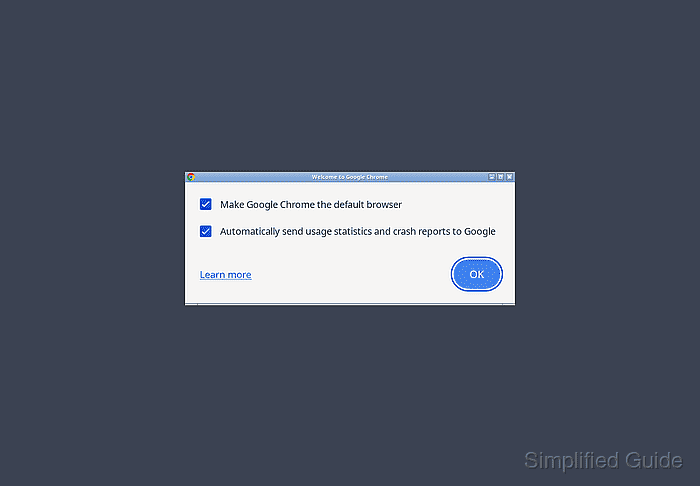
The checkboxes control the default-browser setting and sending usage statistics and crash reports. If either option is unwanted, its checkbox can be cleared before confirmation.
- Choose Stay signed out to use Chrome without a Google account.
Example output:
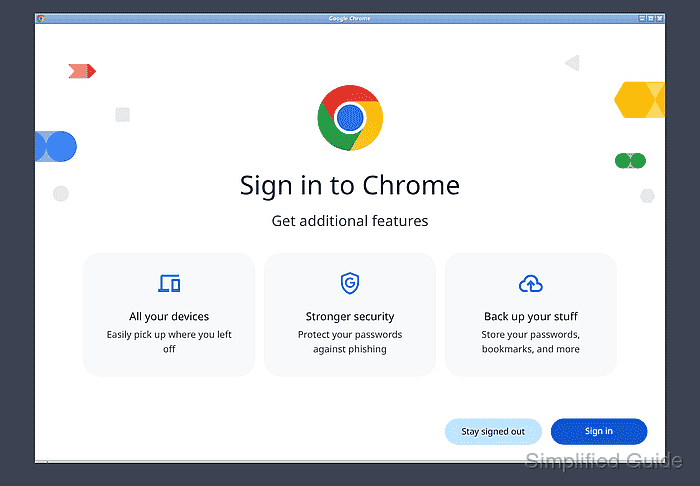
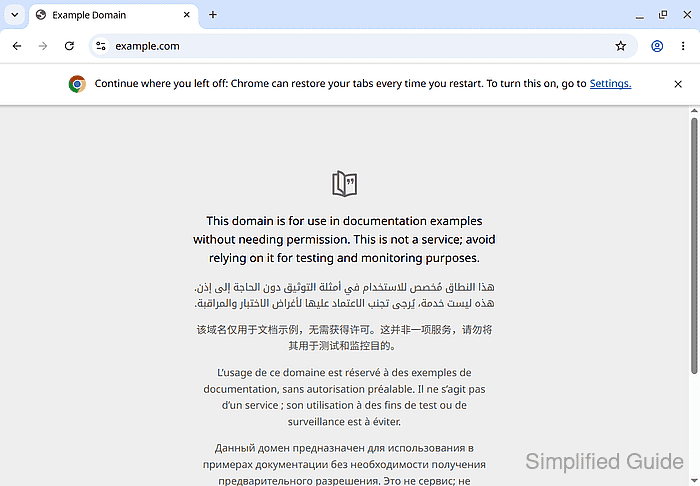
- Open a website in the new Chrome window.
Example output:
Tool: What Is My Browser