Website alerts are controlled by browser permissions. Desktop Google Chrome can block new notification requests and stop alerts from sites that already have permission.
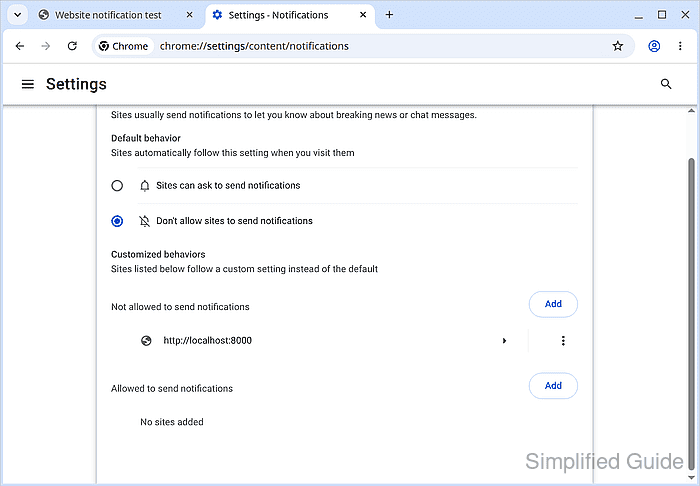
The default notification setting applies to sites without a custom permission. A website already allowed to send notifications remains an exception, so its individual permission also needs to be blocked. Quieter permission prompts only change how requests appear; they do not stop notifications from allowed sites.
Website notifications appear as desktop alerts, while pop-ups open browser windows. Notification permissions do not control Chrome's pop-up blocker or messages drawn inside a web page. The notification controls are available in desktop Chrome on Windows, macOS and Linux.
Steps to block website notifications in Google Chrome:
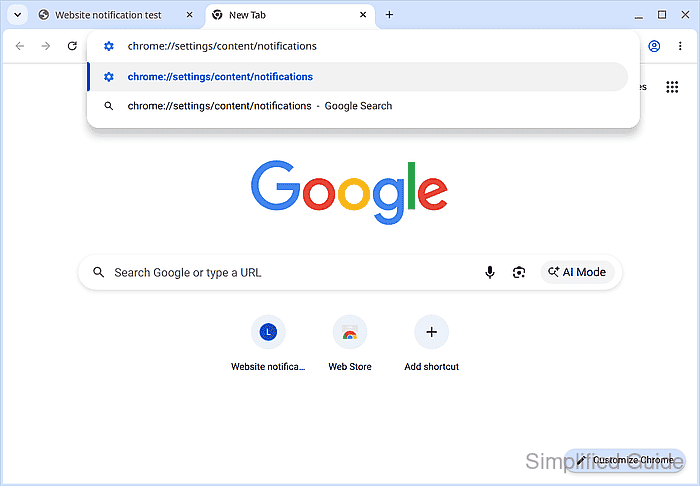
- Open Chrome's Notifications settings at the following address.
chrome://settings/content/notifications
- Select Don't allow sites to send notifications under Default behavior.
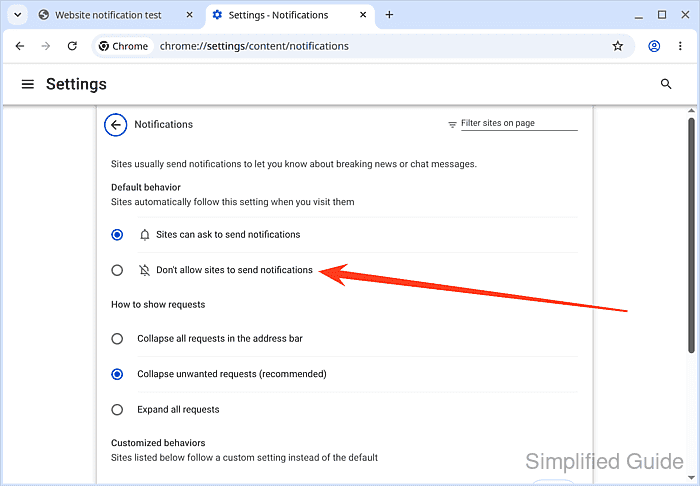
This prevents notification permission requests from sites without an existing Allow exception.
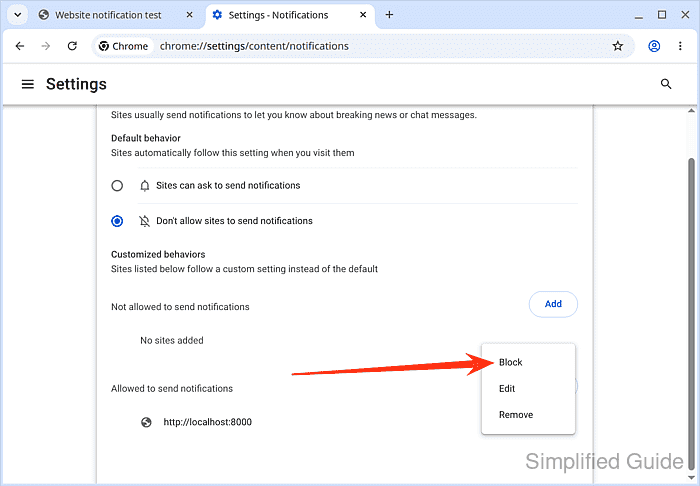
- Open the three-dot menu beside an unwanted website under Allowed to send notifications.
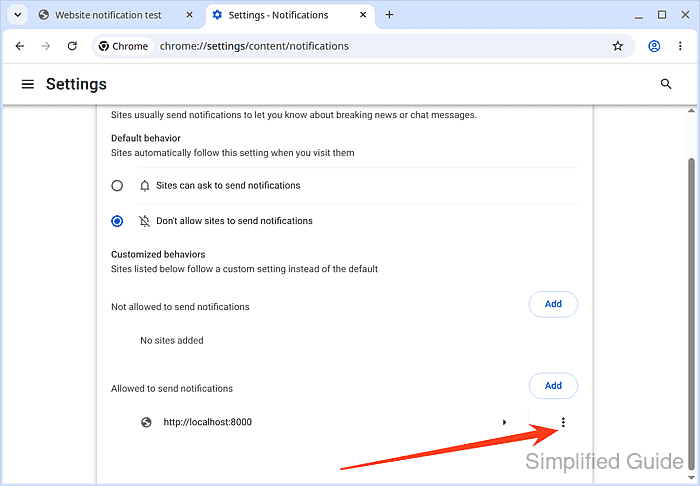
- Select Block for each unwanted site.
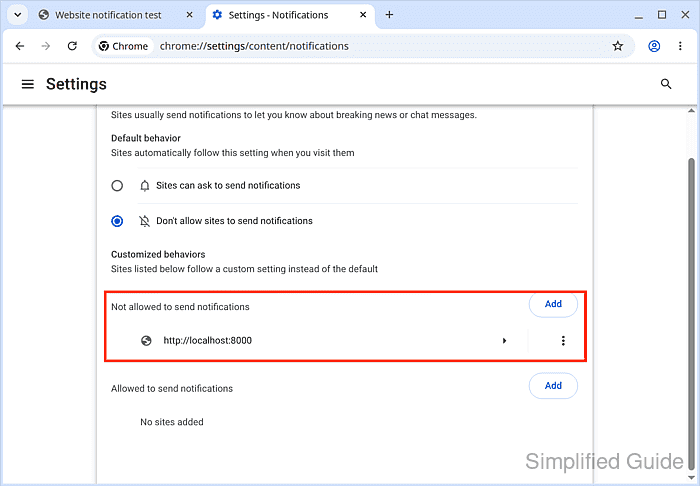
The site moves to Not allowed to send notifications and no more alerts arrive from it. Sites left under Allowed to send notifications can still send alerts.