Desktop Google Chrome blocks automatic pop-ups by default. It can allow pop-ups and redirects for a trusted website or change the default for all websites.
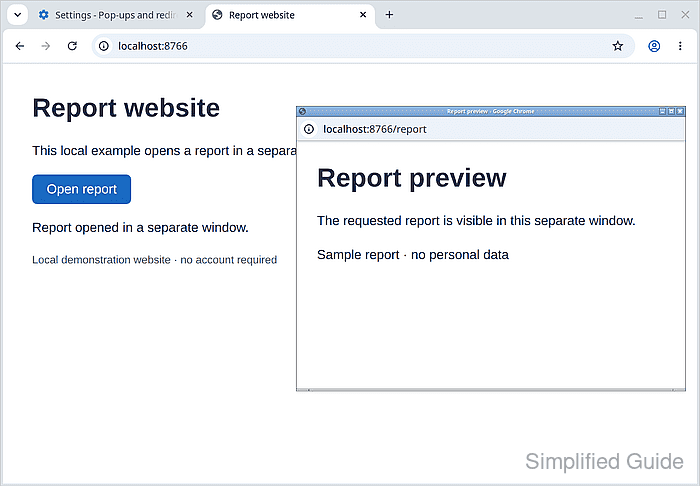
A site exception is usually enough for a sign-in window, payment page or document viewer. It leaves pop-up blocking enabled elsewhere; allowing every website can also let unwanted advertising windows open.
The built-in blocker is a Chrome setting, so there is no separate component to uninstall. Notification alerts use a different permission from pop-up windows.
Steps to turn off the pop-up blocker in Google Chrome:
- Open chrome://settings/content/popups in Chrome's address bar.
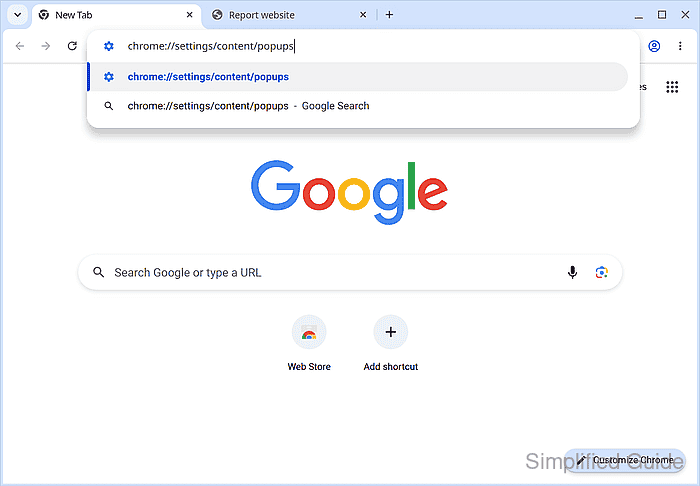
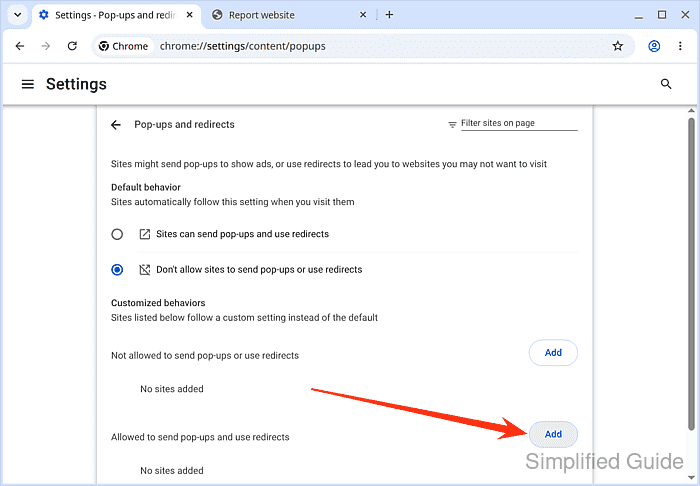
For one trusted website, use the next three steps. For all websites, skip to the Sites can send pop-ups and use redirects step.
- Click Add beside Allowed to send pop-ups and use redirects for a site exception.
- Enter the trusted website's address in the Site field.
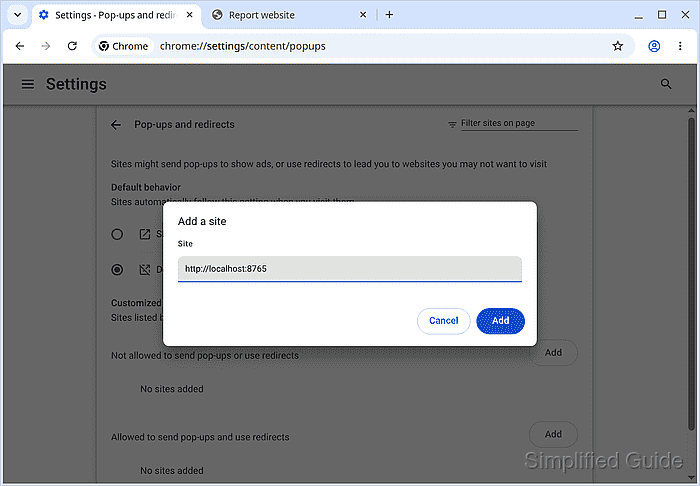
- Click Add to save the allowed website.
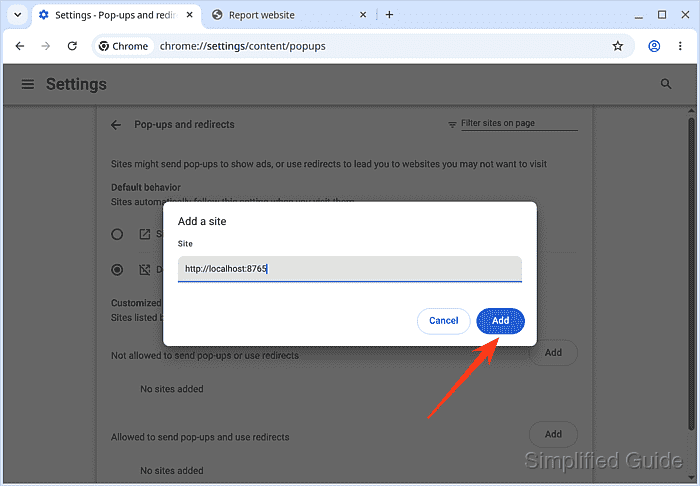
The website now appears in the Allowed to send pop-ups and use redirects list.
- Select Sites can send pop-ups and use redirects under Default behavior only if you want to allow pop-ups from all websites.
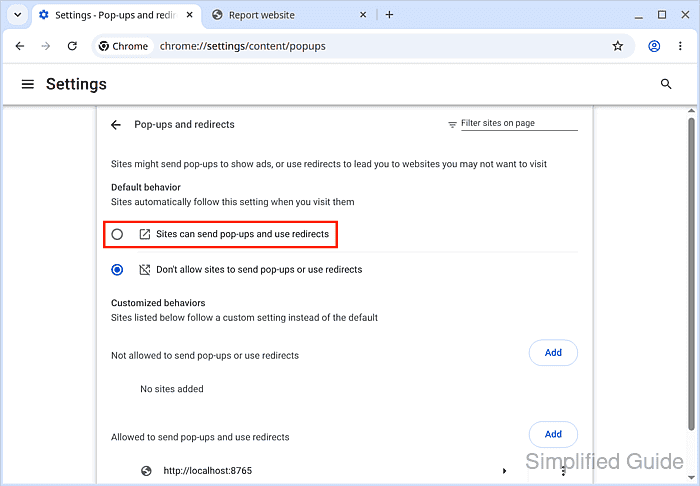
Entries in Not allowed to send pop-ups or use redirects still override the default.
- Retry the blocked action on the website after a page reload.
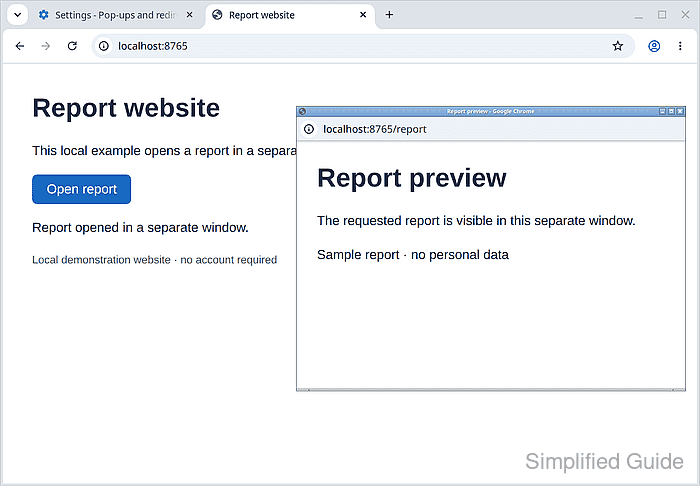
The window now opens, though some websites open a tab instead.