Long-running PHP requests can stop before an import or maintenance task finishes. In cPanel, the max_execution_time setting in Select PHP Version controls how much execution time PHP allows a script, in seconds.
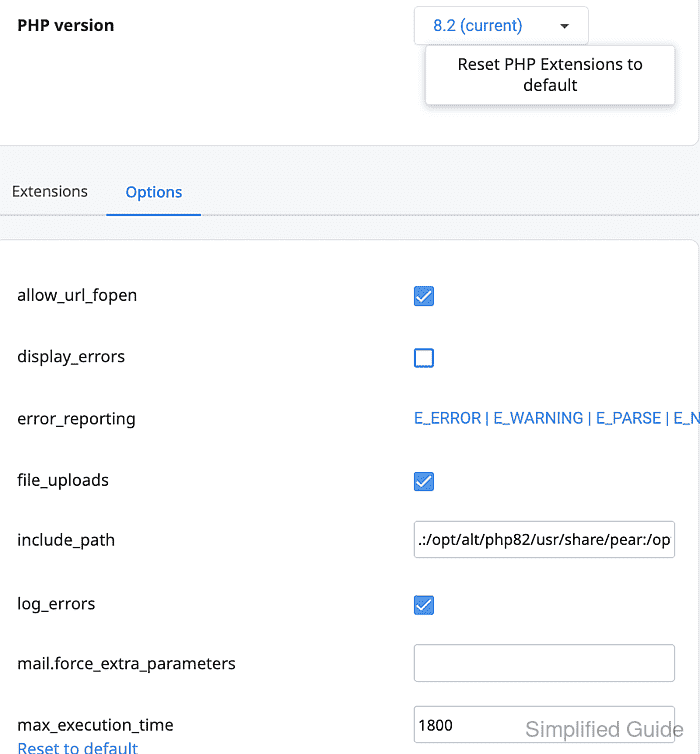
Select PHP Version is the CloudLinux PHP Selector interface offered by some hosts. Its account settings apply to all domains by default unless a domain overrides them under Per Domain Settings.
A finite limit can accommodate a known slow task, but it does not override the web server's own timeout. The site must already use a non-native PHP version managed by PHP Selector; switching PHP versions is a separate compatibility change.
Steps to increase PHP maximum execution time in cPanel:
- Open Select PHP Version from cPanel's Software section.
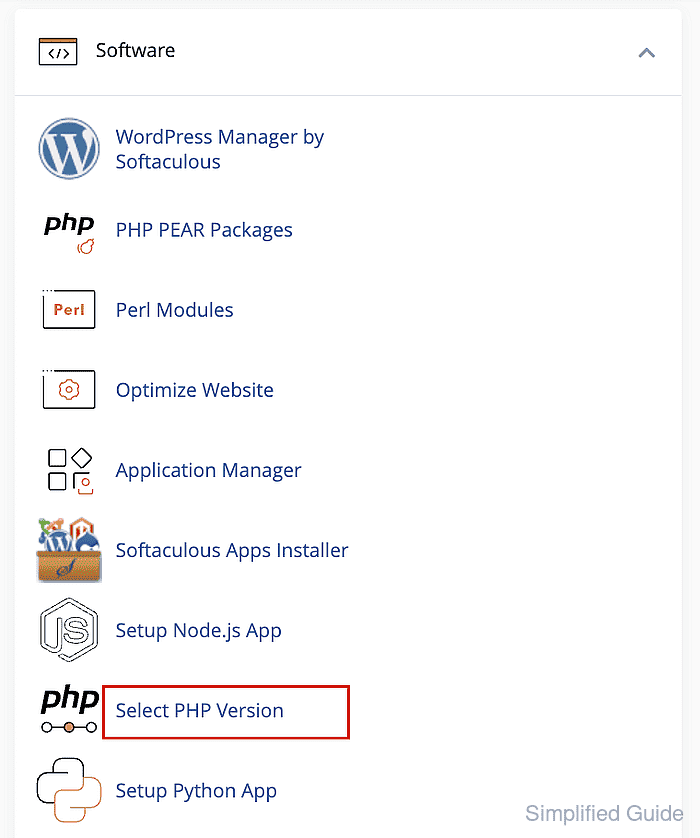
If your host offers MultiPHP INI Editor instead, that is a separate interface for editing PHP directives.
- Click the Options tab for the currently selected PHP version.
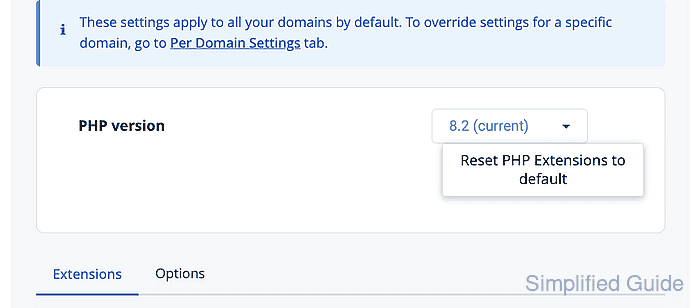
If the version is native or the options are unavailable, your hosting provider can confirm how the site gets its PHP settings. Changing versions solely to expose this field can affect application compatibility.
- Replace the max_execution_time value with a higher finite number of seconds.
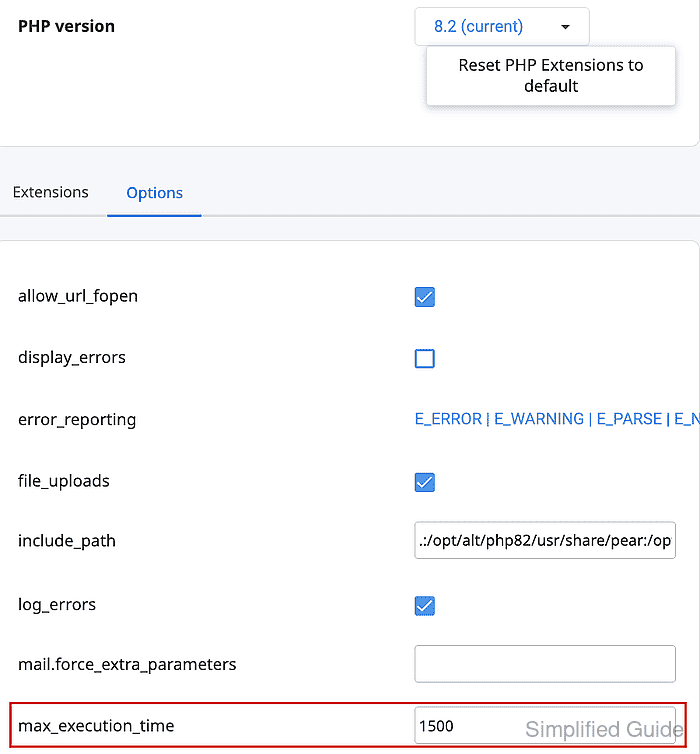
The pictured change raises 1500 to 1800 seconds, or 30 minutes; that is an example, not a recommended limit for every site. A value of 0 already means unlimited execution time. The original value can be restored through this same field without resetting other PHP options or extensions.
- Press Tab to save the new max_execution_time value.
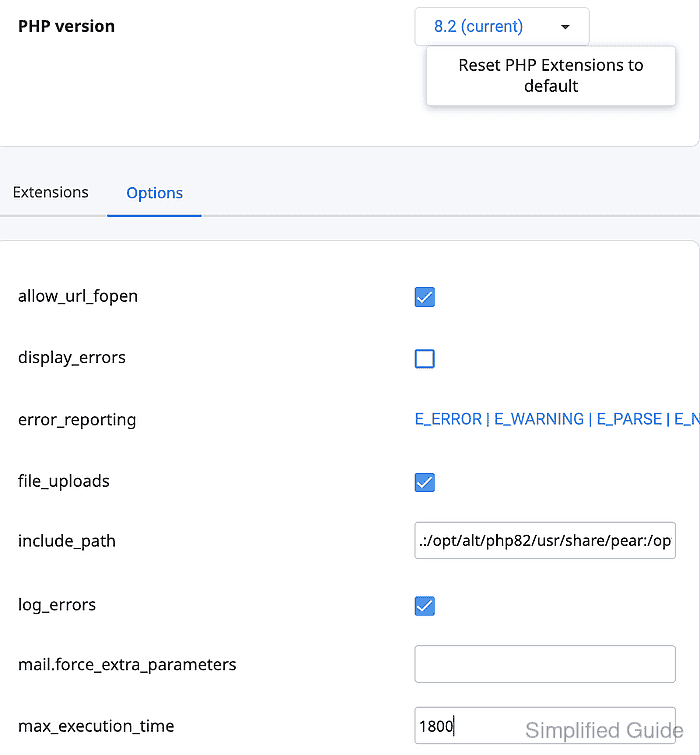
PHP Selector saves this field when focus leaves it.
- Reload the Options page to verify the saved max_execution_time value.
The value should still match the number entered, such as 1800 seconds. If the old value returns, the change was not saved.