How to acknowledge a Nagios Core problem
During an incident, a Nagios Core host or service can stay in a problem state after an operator has already taken ownership. Acknowledgement marks the current HARD problem as handled and records the operator comment that explains the investigation.
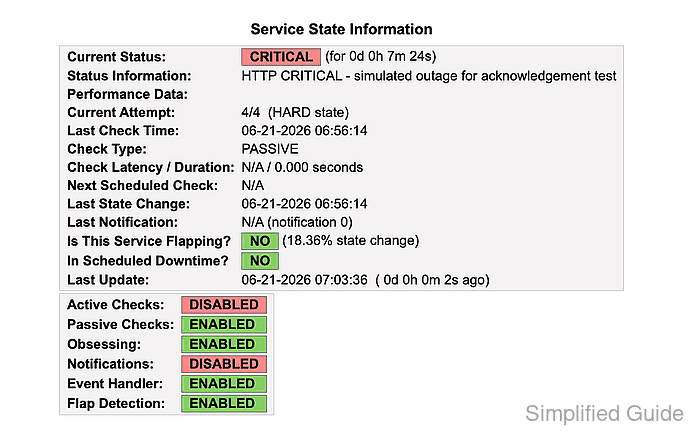
The web interface opens acknowledgement from the host or service detail page. The request is submitted through cmd.cgi and the external command file, so Nagios Core must process external commands and the CGI user must be authorized to submit host or service commands.
Sticky acknowledgement keeps the acknowledgement through further non-OK state changes and removes it when the object returns to OK or UP. Send Notification tells contacts that the problem was acknowledged, while Persistent Comment keeps the note after acknowledgement cleanup. Use scheduled downtime instead when the problem is expected because of planned maintenance.
Steps to acknowledge a service problem in Nagios Core:
- Open the Nagios Core web interface as a user allowed to submit service commands.
http://monitor.example.net/nagios4/
- Open Service Status Details and select the service with the HARD problem.
Use the host detail page instead when acknowledging a host problem; the command label changes to Acknowledge this host problem. A SOFT retry state may not show the acknowledgement command yet.
- Click Acknowledge this service problem in Service Commands.
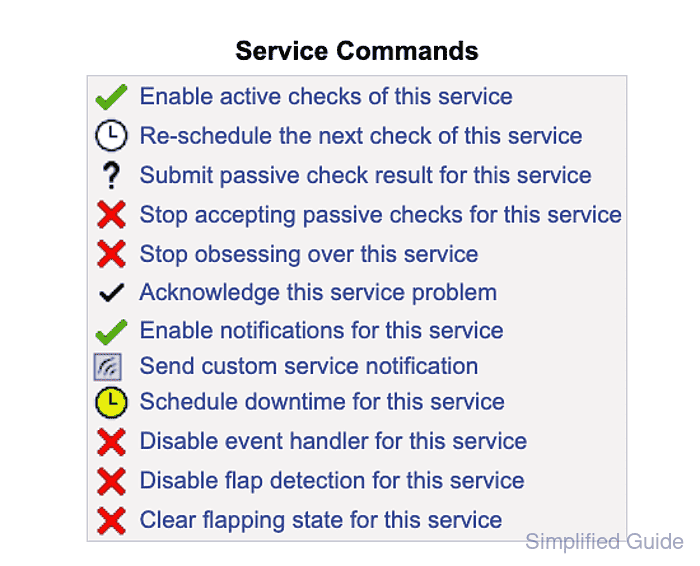
The command link is hidden or rejected when external commands are disabled or the CGI user cannot submit service commands.
Related: How to enable external commands in Nagios Core
Related: How to configure Nagios Core CGI authorization - Confirm Host Name, Service, Sticky Acknowledgement, Send Notification, and Persistent Comment on the command form.
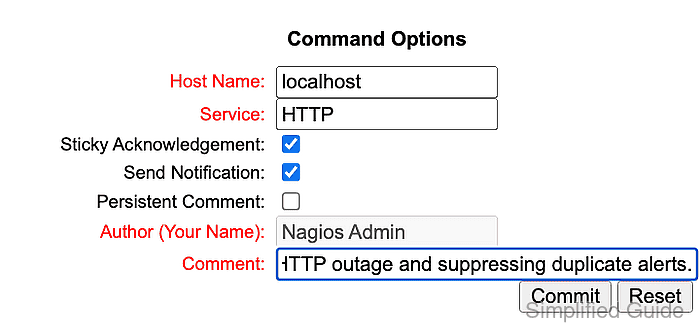
Keep Sticky Acknowledgement selected when repeat alerts should stay suppressed until the service returns to OK. Clear Send Notification when contacts do not need an acknowledgement notice.
- Enter a comment that names the owner or investigation and click Commit.
- Return to the service detail page after cmd.cgi accepts the command.
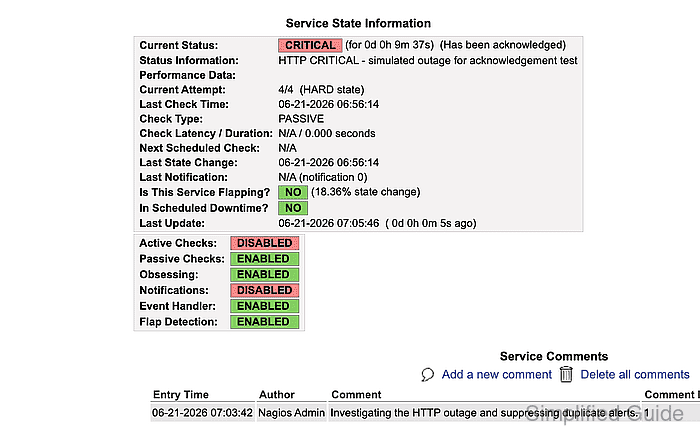
- Confirm Current Status still shows the problem state with Has been acknowledged and that Service Comments contains an Acknowledgement comment.