How to create a functional model in Keras
The Keras Functional API builds a model from symbolic input tensors and layer calls instead of a plain layer list. It fits models that need named inputs, branches, merges, shared layers, or several outputs while keeping the result compatible with normal Keras model APIs.
A functional model starts with keras.Input(), passes those symbolic tensors through layers, and finishes with keras.Model(inputs=…, outputs=…). The resulting graph can be inspected with model.summary() and plotting while still accepting the same predict(), compile(), fit(), and save APIs used by other model types.
A two-input scoring model makes the branch wiring visible. Numeric features and one-hot category features pass through separate branches, merge through Concatenate, and produce one sigmoid score that can be checked with a small prediction batch.
Steps to create a functional Keras model:
- Create functional_model.py with backend selection and imports.
- functional_model.py
import os

os.environ["KERAS_BACKEND"] = "jax"

import keras
import numpy as np
from keras import layers

keras.utils.set_random_seed(42)
Set KERAS_BACKEND before import keras. Use tensorflow or torch only when those backend packages are installed for the project.
Related: How to set the Keras backend - Define the symbolic input tensors for each branch.
numeric_input = keras.Input(shape=(4,), name="numeric_features")
category_input = keras.Input(shape=(3,), name="category_features")
The shape value excludes the batch dimension. A shape of (4,) accepts batches of four numeric features.
- Pass each input through its own layer stack.
numeric_branch = layers.Dense(8, activation="relu", name="numeric_projection")(numeric_input)
category_branch = layers.Dense(4, activation="relu", name="category_projection")(category_input)
- Merge the branches and create the model output.
features = layers.Concatenate(name="combined_features")(
    [numeric_branch, category_branch]
)
features = layers.Dense(6, activation="relu", name="hidden_features")(features)
score = layers.Dense(1, activation="sigmoid", name="risk_score")(features)
- Instantiate the functional model from the input and output tensors.
model = keras.Model(
    inputs=[numeric_input, category_input],
    outputs=score,
    name="risk_score_functional",
)
keras.Model() can receive lists, tuples, or dictionaries of tensors for multi-input or multi-output models.
- Add a prediction batch and print the summary details.
model.summary()

numeric_batch = np.array(
    [
        [0.10, 0.80, 0.35, 0.20],
        [0.90, 0.15, 0.55, 0.70],
    ],
    dtype="float32",
)
category_batch = np.array(
    [
        [1.0, 0.0, 0.0],
        [0.0, 1.0, 0.0],
    ],
    dtype="float32",
)

prediction = model.predict([numeric_batch, category_batch], verbose=0)

print(f"backend: {keras.backend.backend()}")
print(f"inputs: {[tensor.name for tensor in model.inputs]}")
print(f"output layer: {model.layers[-1].name}")
print(f"prediction shape: {prediction.shape}")
print(f"first prediction: {float(prediction[0, 0]):.4f}")
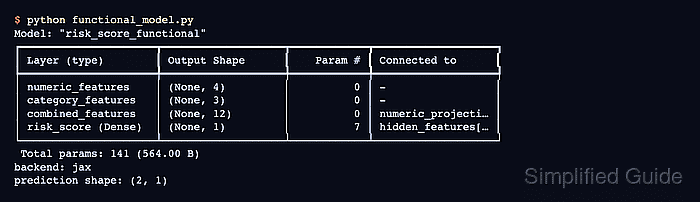
- Run the script and confirm the graph plus prediction shape.
$ python functional_model.py
Model: "risk_score_functional"
┏━━━━━━━━━━━━━━━━━━━━━┳━━━━━━━━━━━━━━━━━━━┳━━━━━━━━━━━━┳━━━━━━━━━━━━━━━━━━━┓
┃ Layer (type)        ┃ Output Shape      ┃    Param # ┃ Connected to      ┃
┡━━━━━━━━━━━━━━━━━━━━━╇━━━━━━━━━━━━━━━━━━━╇━━━━━━━━━━━━╇━━━━━━━━━━━━━━━━━━━┩
│ numeric_features    │ (None, 4)         │          0 │ -                 │
│ (InputLayer)        │                   │            │                   │
├─────────────────────┼───────────────────┼────────────┼───────────────────┤
│ category_features   │ (None, 3)         │          0 │ -                 │
│ (InputLayer)        │                   │            │                   │
├─────────────────────┼───────────────────┼────────────┼───────────────────┤
│ numeric_projection  │ (None, 8)         │         40 │ numeric_features… │
│ (Dense)             │                   │            │                   │
├─────────────────────┼───────────────────┼────────────┼───────────────────┤
│ category_projection │ (None, 4)         │         16 │ category_feature… │
│ (Dense)             │                   │            │                   │
├─────────────────────┼───────────────────┼────────────┼───────────────────┤
│ combined_features   │ (None, 12)        │          0 │ numeric_projecti… │
│ (Concatenate)       │                   │            │ category_project… │
├─────────────────────┼───────────────────┼────────────┼───────────────────┤
│ hidden_features     │ (None, 6)         │         78 │ combined_feature… │
│ (Dense)             │                   │            │                   │
├─────────────────────┼───────────────────┼────────────┼───────────────────┤
│ risk_score (Dense)  │ (None, 1)         │          7 │ hidden_features[… │
└─────────────────────┴───────────────────┴────────────┴───────────────────┘
 Total params: 141 (564.00 B)
 Trainable params: 141 (564.00 B)
 Non-trainable params: 0 (0.00 B)
backend: jax
inputs: ['numeric_features', 'category_features']
output layer: risk_score
prediction shape: (2, 1)
first prediction: 0.4898
The summary should show both input layers, the Concatenate layer, and the named risk_score output layer. The prediction shape should match two rows with one score per row.